300 BLACKS WENT BACK TO AFRICA IN THIS SHIP IN 1896-HALF FROM ARKANSAS! ARKANSAS BE SMART IN 2012 AND COME BACK TO BLACK FREEDOM NOW!


ARKANSAS BLACKS WAITING TO GO TO AFRICA BY SHIP IN A CHURCH 1896-MORE BLACKS FROM ARKANSAS WHEN BACK DURING THIS PERIOD THAN ANY OTHER STATE!

BROTHER ISAIAH WASHINGTON WENT BACK TO AFRICA AND IS DOING SOMETHING TO HELP HIS ROOT COUNTRY SIERRE LEONE-HELP HIM AT reachonemillion.org
Showing posts with label BLACK WOMEN. Show all posts

Tuesday, December 27, 2011

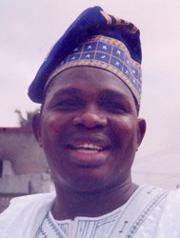
ALAO ADEDAYO IS SAVING YORUBA LANGUAGE!-HIS NEWSPAPER "ALAWOYE" CAN SELL UP TO 150.000 COPIES AN ISSUE - MORE THAN ENGLISH PAPERS SELL- YOU MUST DO YOUR PART TO KEEP YORUBA LANGUAGE FROM DYING -BUY ALAROYE EVERY WEEK AND ALL OTHER YORUBA MAGAZINES,TENI-N-TENI MAGAZINE YOU NAME IT SO THAT YORUBA WILL NOT DIE!

from yeyeolade.wordpress.com

Alaroye Newspaper IS SAVING YORUBA LANGUAGE From DESTRUCTION!-ALAO ADEDAYO FOUNDER TELLS HOW HE FINALLY SUCCEEDED IN PRODUCING A FLORISHING YORUBA NEWSPAPER ! –YORUBA IS DYING! —WHAT CAN YOU DO TO SAVE IT??-FROM VANGUARD NEWSPAPER((NIGERIA)

by
 Alao Adedayo-Founder/savior of Yoruba Language thru his GREAT newspaper Alaroye! Do Your own part and BUY it every week, get your children to read it- FIGHT TO SAVE Yoruba Language. FROM DYING!       
                                                                                                                                                                                        I stumbled four times to make Alaroye a success story – Alao Adedayo
July 8, 2011
Musa Alao Adedayo, a.k.a Agbedegbeyo, is the Publisher/Chief Executive Officer, World Information Agents Limited, the publishing company of the popular Yoruba newspaper, ALAROYE. He spoke to BASHIR ADEFAKA about himself and how he stumbled four times to get it right with the vernacular paper that has today become a success story in the newspaper industry in Nigeria. Excerpt
How did you start out in life?
I am a Muslim but I am not a biased person because God Himself never loved a biased person.  But those who know me from the beginning used to call me Alao Agbedegbeyo.  When I talk of people who know me from the beginning, they are people from the  70s, early 80s and so on.
I came from Abeokuta to Lagos in 1980 doing Ewi (lyrics) artist.  In those days as an Ewi person, you must be attached to a particular musician and I was with Dele Abiodun, who was like my master.  Ewi was like side-attraction at a show and it would come on stage while the musician and his band members were taking a rest.
I had also participated in some dramas through the likes of Jide Kosoko, Ishola Ogunsola, (Dr. I. Show Pepper) and Adebayo Salami (Oga Bello).  It was because of the Ewi that I used to present in those days that Jide Kosoko would always come to Dele Abiodun’s shows.  He would say to me, “Alao, we are having an outing somewhere and I want you to perform your Ewi there,” and I would say no problem.
How did Ewi correlated with the broadcaster that you were?
By and large as God would have it, through that channel, as I have mentioned before, I became a broadcaster.  Sometime in 1979, Radio Lagos started a programme called, Kebuyeri, which was mainly for the Awada Kerikeri group that was then run by Adebayo Salami popularly called Oga Bello.  We went to a show at Ebute Metta and Adebayo Salami and his group members had also come to that show.
It was there he saw me and said, “Ah, Alao! Radio Lagos has just given us a programme and we want you to be in it” and I said no problem.  We didn’t even discuss money because what was more important to us at that time was the job.  That was how we started the programme and it became overwhelmingly popular turning me into a celebrity.
Behind that programme, a plan was going on by the management of Radio Lagos and the producer of the programme, Adebayo Tijani, communicated to me that management was talking about me and that was how I became a newscaster with Radio Lagos reading Yoruba news at that time.
I left Radio Lagos in 1981, which was a real year of politicking in the country.  Then, Radio Nigeria Ikeja which was established within that time was located in Ikoyi and in fact when we were there, we were always abusing and calling them, “Agberekusu f’ohun Ikeja” that is, people who were on the Island claiming to be speaking from Ikeja (laughs).  I eventually found myself at the Radio Nigeria Ikeja and later NTA but I did not stay long before I left.
When you left service, where did you go?
When we joined broadcasting, most of us did not get the job because of our educational qualifications and so, when I left the NTA, it was an opportunity for me to now go and improve myself, which then took me to the Nigerian Institute of Journalism (NIJ) and then the universities for my first and later second degrees.
How did Alaroye come into the show?
It was in May 1985 when I was 25 and while I was still working as a Yoruba newsreader with the NTA that I decided to try my hands in publishing, which brought about the Alaroye.  Between May and October of 1985, I was only able to publish four editions of the tabloid that was meant to be weekly.  I was doing it alone because I had no such money to hire people.   It thus became a staggered publication because it was a one-man’s idea and as a result, no prospective partner was willing to support or invest in the business.  It was also like that because Yoruba newspaper business at that time was seen as a barren land.  So, naturally, it died.
Further effort was made at resuscitating the paper in 1990 but it couldn’t get to the vendors,  though it was being published. It was to be launched that year so that some funds could be raised. On the day of the launching, a prominent member of the community who was a friend of both the chief launcher and chairman, Lai Balogun, died. So it was a wrong day for the Alaroye’s show as the whole community was thrown into mourning and no one remembered the launch.
In 1994 when I made the third attempt at the publication, I was convinced that Alaroye would one day emerge a success story because, for four weeks, I was able to publish the weekly paper consecutively and throughtout the period,  it was well circulated and generally accepted.
And because I had acquired more knowledge about all it required to make a successful print media, Alaroye was able to stand and  able to meet the standard of a newspaper. Yet, it couldn’t go far because I could not raise the required fund to keep it going.  And for two years, it remained like that until July 2, 1996, when we were able to revisit it and tried our best to make it what it is today.  That was the fourth attempt and it has now come to stay.
I thank God that today, Alaroye is seen not as a happenstance, but a planned revolution in the newspaper industry in Nigeria.  And it is so because, no Yoruba newspaper has been so successful because most of the earlier issues, people have said, were translataion of English newspapers or repetition of news items already carried on radio and television.
Alaroye is original for its thorough analysis, research works and investigative journalism that many have appreciated as having put the newspaper on a very high pedestal. It informs, educates, entertains and analyses events as they unfold through the Yoruba culture. For this, it circulates in Nigeria, wherever Yoruba domicile, with the print run sometimes as high as 150,000 copies per week.  I have the reason to really thank God today because, in Nigeria, particularly among the Yorubas, Alaroye is a language. It is the culture.
The Conference of Yoruba Leaders showcased by your newspaper, which debuted in 2002, hasn’t seemed to produce any result considering the fact that Yorubas are still intolerably disunited.  What is the problem?
The problem we have in Yorubaland is the way we play our own politics.  What Alaroye is trying to do is to serve as a bridge to bring all the leaders together.  There is need for a connecting point, which will connect all Yoruba people with one another.  We have very, very intelligent, well exposed and highly patriotic sons and daughters of Yorubaland.  We cannot run away from the fact that we are Yorubas; we had been Yoruba people before Nigeria and we will remain Yoruba people within Nigeria.
Yes, political party differences are there but we should be able to know that there is difference between politics and governance.  So, during election, you can abuse and criticize yourselves but once election is over, issue of governance becomes the central point while politicking is set aside for another election season.  And if you are the governor, you should see yourself as the father of all, as the head of government and people should see the governor beyond his party but as the leader that all of us should relate well with as one of our own.
In the year 2002, I went to Papa Abraham Adesanya and I said to him, “E ma bawon se oselu.  Ema bawon da si oro oselu.  Asiwaju Yoruba ni ki’e je” (That Papa should not be part of politics other Yorubas played but that he should be okay with himself as Leader of the Yoruba Nation).
He asked me why.  We talked a lot about it and he agreed with me.  Not only that I went to discuss it with him, we made it a critical editorial issue, which some of the Afenifere members then responded to.

[

Leave a Reply

Gravatar
Yeye Akilimali Funua Olade: You are commenting using your WordPress.com account. Log Out / Ch

Saturday, December 24, 2011

BACK TO AFRICA! -BLACKS IN ARKANSAS WERE SMART IN 1868-THEY WENT BACK AND BUILD UP THEIR NEW COUNTRIES IN BLACK FREEDOM!-FROM ENCYCLOPEDIAOF ARKANSAS.NET


from encyclopediaofarkansas.net
Skip Navigation Links
Home / Browse / Back-to-Africa Movement
Back-to-Africa Movement

The Back-to-Africa Movement mobilized thousands of African-American Arkansans who wished to leave the state for the Republic of Liberia in the late 1800s. Approximately 650 emigrants left from Arkansas, more than from any other American state, in the 1880s and 1890s, the last phase of organized group migration of black Americans to Liberia.
As early as 1820, black Americans had begun to return to their ancestral homeland through the auspices of the American Colonization Society (ACS), an organization headquartered in Washington DC, which arranged transportation and settlement. The ACS founded the Republic of Liberia in 1847, with its flag and constitution emulating American models, and nearly 13,000 redeemed slaves and free blacks had settled there before the Civil War. With the Civil War and abolition of slavery, the Back-to-Africa movement declined. However, interest in an African migration rekindled after Reconstruction ended and conditions for black Americans worsened in the late 1870s.
In several Delta counties of eastern Arkansas, white Democrats used extraordinary measures during the 1878 elections to keep African Americans from voting. In Phillips County, which was approximately seventy-five percent black, Democrats even stationed a heavy cannon in front of the main black polling place. Anthony L. Stanford, a black physician and Methodist preacher who also served as Phillips County’s Republican state senator, contacted the ACS, requesting assistance with emigration of a number of black citizens to Africa. In 1879, he led twenty-three residents of Phillips County to Liberia, and another 118 emigrants followed the next year from Phillips and Woodruff counties. Whereas Phillips County had polled a Republican majority in the 1876 presidential election, by the gubernatorial election of 1880, only ten Republican votes were cast in the county that had more than 15,000 black residents. Clearly, the Back-to-Africa movement was motivated by the deterioration in status of black citizens in the Delta in the late 1870s.
Conditions improved somewhat in the 1880s. Black men appear to have regained the franchise in the 1882 elections, and black Republican officials were elected to local offices in Delta counties through the rest of the decade. The 1880s also saw a massive in-migration as African Americans from the Deep South, especially South Carolina, fled their own oppressive conditions and looked to Arkansas as a place of plentiful work and cheap land. The 1880s seemed to be a time of promise for black Arkansans, and interest in African emigration waned but never went away. The Reverend Henry McNeal Turner of Atlanta, the foremost advocate nationally for African emigration, was elected bishop of the African Methodist Episcopal (AME) Church in 1880 and was appointed to the eighth district, composed of Arkansas, Mississippi, and Indian Territory. Throughout the 1880s and early 1890s, Turner made yearly trips to Arkansas to preside over annual church meetings, and he always used the pulpit to promote emigration and missions to Africa. In 1886 and 1887, an African man, self-proclaimed “professor” Jacob C. Hazeley, traveled around the state giving lectures accompanied by picture displays about Africa. Hazeley encouraged interested parties to apply for emigration to the ACS. A farm family from Lee County and a schoolteacher from Fort Smith (Sebastian County) emigrated to Liberia in 1882. Three more left from Conway County in 1883, a family of eight from Phillips County emigrated in 1887, and a Faulkner County family of eight moved to Liberia in the spring of 1889.
However, it would be the return of political and racial violence in the late 1880s and early 1890s that made Liberia fever rage through black precincts of Arkansas. In the 1888 and 1890 elections, the Democratic Party faced opposition by a biracial alliance of the rural poor with the cooperation between the agrarian populist movement and the Republican Party. To win the elections, fraud and terror tactics eclipsed those used in 1878 in degree and scale. The Democratic-controlled state legislature in 1891 passed laws aimed at disfranchising black and poor white voters. Before the session ended, the General Assembly crafted Jim Crow segregation laws. In the year that would follow disfranchisement, some of the most horrific lynchings in American history occurred in Arkansas.
In response, black Arkansas sharecroppers and small landowners flooded the ACS office in Washington with letters begging for passage to Africa. As more information circulated back to Arkansas, interest only swelled. Would-be emigrants formed at least forty “Liberia Exodus” clubs that elected officers and held regular meetings, often disguising their true purposes from white neighbors hostile to the movement. Applications for emigration came in from the majority of Arkansas’s seventy-five counties, but interest was particularly keen in areas where political conflict was most intense—in Woodruff, St. Francis, Lonoke, and Jefferson counties in east-central Arkansas and the Arkansas River Valley from Little Rock (Pulaski County) to Atkins (Pope County). In Conway County alone, which experienced some of the most spectacular political violence, nearly 1,500 African Americans, about twenty percent of the county’s black population, formally applied to emigrate to Liberia. Most of the emigrants sent by the ACS to Liberia in the early 1890s hailed from Arkansas, including nearly 100 from Morrilton (Conway County) and Plumerville (Conway County) and forty-four from Little Rock and Argenta (now North Little Rock in Pulaski County). A group of thirty-four would-be emigrants from Woodruff County sold their possessions and traveled to New York City in 1892 to beg unsuccessfully for passage to Africa. Their unexpected arrival created a refugee crisis for the ACS, leading it to end its seventy-five-year long resettlement program. The society got out of the emigration business just at the time demand was greatest in Arkansas. To address this interest, some white businessmen in Birmingham, Alabama, formed a company that transported to Liberia more than 200 Arkansans, mostly from Jefferson, St. Francis, and Lonoke counties, in three voyages between 1894 and 1896. A few additional black Arkansans booked commercial passage on steamers that traveled to Liberia from New York via ports in Europe. The interest in Africa spilled over into missionary work. Approximately a dozen black Arkansans and their families traveled to Africa in the 1890s as missionaries, a number representing nearly a quarter of known black missionaries to Africa in that decade.
For the black Arkansans who emigrated, their African Promised Land brought great challenges and some rewards. The Republic of Liberia granted each emigrant family twenty-five acres of free land and settled most of the Arkansas arrivals together in two communities, Brewerville and Johnsonville, a few miles into the interior from the capital, Monrovia. In the heart of the tropics and one of the wettest places in Africa, Liberia hosted a variety of diseases, especially potent strains of malaria that ravaged the emigrant population. People struggled with illness just when they had the most work to do—clearing land, planting crops, and building homes. Settlers had to adjust to new foods and lifestyles and learn to grow a new cash crop, coffee, instead of cotton. The Arkansas emigrants of 1879 and the 1880s prospered through coffee cultivation. However, the coffee trees planted by settlers of the 1890s began to produce berries just in time for the cataclysmic drop in coffee prices, as production in Brazil began to glut the world market in the late 1890s. Several Arkansas emigrants returned to America; perhaps more wished to return but lacked the money for passage. But many of these new Liberians apparently were pleased with their new home. In the words of one Arkansas settler, William Rogers, who wrote back to family in Morrilton, Liberia was “the colored man’s home, the only place on earth where they have equal rights.” What Rogers liked best about Liberia, he said, was that “there are no white men here to give orders; and when you go in your house, there is no one to stand out, and call you to the door and shoot you when you come out. We have no foreman over us; we are our own boss. We work when we want to, and sit down when we choose, and eat when we get ready.” Some of the Arkansas families became prominent in the black republic. Victoria David Tolbert, Liberia’s former first lady whose husband, President William Tolbert, was murdered in the violent coup of 1980, was the daughter of Isaac David, who left Little Rock in 1891 with his family at the age of five.
For additional information:Barnes, Kenneth C. Journey of Hope: The Back-to-Africa Movement in Arkansas in the Late 1800s. Chapel Hill: University of North Carolina Press, 2004.
Redkey, Edwin S. Black Exodus: Black Nationalist and Back-to-Africa Movements, 1890–1910. Yale University Press, 1969.
Patton, Adell, Jr. “The Back-to-Africa Movement in Arkansas.” Arkansas Historical Quarterly 51 (Summer 1992): 164–177.
American Colonization Society Records. Manuscripts Division, Library of Congress, Washington D.C.
Kenneth C. Barnes
University of Central Arkansas
Related Butler Center Lesson Plans: Charting Changes (Grades 5-8)
Last Updated 6/21/2010
About this Entry: Contact the Encyclopedia / Submit a Comment / Submit a Narrative

LOOK WHAT THIS WHITE BOY SAID ABOUT US BLACKS GOING BACK TO AFRICA!-FROM NEWS.STANFORD.EDU

http://news.stanford.edu/news/2006/march1/colonize-030106.html

Historian situates 'back-to-Africa' movements in broad context

L.A. Cicero davis David Brion Davis, foreground, responded to a question during a discussion session connected to the Tanner Lectures on Human Values, which he delivered on campus last week. Panelist Walter Johnson looks on.
BY BARBARA PALMER
The so-called "back to Africa" movements, which sent American blacks, willingly and unwillingly, as colonists to West Africa and elsewhere during the 19th and 20th centuries, often have been considered as a kind of sidebar to American history.
In presenting the Tanner Lectures on Human Values on campus last week, noted slavery historian David Brion Davis made the experience of African American colonists in Liberia, and the symbolic meaning of colonization, the centerpiece of his talks. In two lectures titled "Exodus, Exiles and Promised Lands," Davis, the Sterling Professor of History, Emeritus, at Yale University, also put African American colonization within the broader context of the global history of mass deportations of groups of unwanted people by linking it to the archetypal story in Exodus of the Israelites fleeing Egypt. And he described a circuitous route by which colonization fueled black nationalism and played an ironic but crucial role in the development of the civil rights movement.
Davis is the author of many books, including the seminal works The Problem of Slavery in Western Culture (1966) and The Problem of Slavery in the Age of Revolution: 1770-1823 (1975). His two lectures were based on three chapters of an upcoming third volume, The Problem of Slavery in an Age of Emancipation, which will complete the series.
Davis' talks, and the public discussions that followed them, underscored the broad support of colonization by African Americans in West Africa and elsewhere at various moments in the 19th century and the persistence of the idea into the 20th century. Virtually every national leader from Thomas Jefferson to Abraham Lincoln held the conviction that blacks and whites could not coexist as free and equal citizens, Davis wrote in his 2003 book, Challenging the Boundaries of Slavery.
A list of supporters of African American colonization would include "John Marshall, James Madison, Daniel Webster, Andrew Jackson, Chief Justice Roger B. Taney, Stephen A. Douglas and even Harriet Beecher Stowe," Eric Foner, the DeWitt Clinton Professor of History at Columbia University, pointed out in a discussion session on Friday.
The motives of whites for supporting the colonization movement were themselves complex and contradictory, Davis demonstrated. The American Colonization Society (ACS), which was founded in 1816, had the support both of white philanthropists who sought a refuge for blacks from degrading living conditions and slave owners who were living under the "nuclear threat" of the Haitian revolution. Slave owners wanted free blacks removed from the nation for fear that they might ignite an insurrection among slaves.
Historians understandably have treated the ACS with hostility, Davis said. But the inherent racism in the ACS should not obscure the fact that 19th-century colonizationists were, on many points, more realistic than the abolitionists, Davis said.
It's not that colonization was the right solution, the historian said, but colonizationists believed—with good reason, it would turn out—that "white racial prejudice would remain intractable for generations, that progress would depend on black solidarity and collective effort, and that emancipation could not be divorced from the crucial need for a social and economic climate in which freed people could exercise their full capacities for human development."
'A city on a hill'African American settlers in Liberia, who took to Africa with them American political, social, cultural and legal conventions, were frequently likened to the founders of Jamestown and Plymouth colonies, Davis said. Nineteenth-century supporters of colonization envisioned a role for settlers in Liberia of "civilizing" Africa and building a society that would be as attractive to American blacks as the United States had proved to be for immigrants, Davis said. Liberia was to be, as John Winthrop imagined Puritan settlements, "a city on a hill," he said.
Black immigration to Liberia was framed within the Exodus narrative, much as the first English colonists in North America had conceived of their migration as a journey to the Promised Land, Davis said. Supporters of British colonization to Virginia promoted it as a way to bring civility and Christianity to the "savages" of North America, and to redeem England of the idleness and crime of its unemployed masses, Davis said. "The failure of all these expectations did not kill the initial dream or deter Virginians and other Americans from applying a very similar formula, over two centuries later, to the colonization of Africa."
In Liberia, with limited aid from the United States, the Americo-Liberians built churches, schools and colleges, maintained stable political parties, managed to assimilate Africans liberated from slave ships by the U.S. Navy and established a constitutional republic in 1847, Davis said. The survival of their nation made an important though often overlooked contribution to black pride and hope, Davis said.
Achievement in Liberia also underlined the futility of progress for blacks in a society dedicated to white supremacy, he said. Slave emancipation in the northern states had led to a black population living in abject poverty and deprived of education, civil rights and any hope of meaningful improvement, he said.
Although colonization was in many ways disastrous—malaria decimated the colonists and Americo-Liberians engaged in bloody battles with tribes who were already living in West Africa—the experience of African Americans in Liberia helped nourish black nationalism and, in turn, an increasingly popular domestic demand for equal civil rights, he said.
In the 20th century Marcus Garvey championed colonization and compared immigration to Liberia to the Jewish recovery of Palestine, Davis said. In the words of Martin Luther King Jr., Davis said, Garvey was the first man "on a mass scale and level to give millions of Negroes a sense of dignity and destiny and make the Negro feel he was somebody."
A glaring defect of colonization ideology was its failure to recognize that "from the very beginnings of American history, the lives of blacks and whites had been intertwined on the most complex social, cultural, economic and psychological levels," Davis said. Whites themselves were yoked to the blacks they had enslaved, he said. "The nation as a whole, modeled on ancient dreams of deliverance and fulfillment, could march no farther forward than all the victims of its self-betrayal."
Efforts to remove African Americans from society have not ended, suggested sociologist Larry Bobo, the Martin Luther King, Jr. Centennial Professor, at a discussion session Thursday. "Are we not in the process of creating incredibly harsh new 'internal colonies' with our vast prison industrial complex?" he asked.
In the United States today, there are more African American men in prison than in college; half of all those in jail or in prison are African American, though blacks are only 12 percent of the U.S. population, and one in three black men in their twenties is under some form of criminal justice supervision by the state, Bobo said.
"There is no other way to view this than as a form of social removal," Bobo said. "It borders on the sort of 'social death' [Harvard sociologist] Orlando Patterson once characterized as accompanying slavery."
The Tanner Lectures were established in 1978 by Obert Clark Tanner, an industrialist and legal scholar who studied philosophy at Harvard and Stanford and later served as a member of the Stanford faculty in religious studies. The lectures were presented by the Barbara and Bowen McCoy Program in Ethics in Society and the Office of the President.

Thursday, December 22, 2011

BACK TO AFRICA! -MALCOLM X TOLD US "WHY YOU LEFT YOUR MIND IN AFRICA!" -BLACK MEN COME BACK TO AFRICA NOW AND BE FREE OF PRISON,MURDER,WHITE COP KILLING-GENOCIDE!

FROM yeyeolade.wordpress.com


ACK IS BEAUTIFUL!

DEDICATED TO SAVING BLACKNESS WORLDWIDE!

MALCOLM X ON”GOING BACK TO AFRICA”-FROM MALCOLM X SPEAKS-WE CAN EITHER GO BACK TO AFRICA OR BECOME CULTURALLY AFRICAN WHILE IN AMERIKKKA BUT BE TOTALLY LIBERATED FROM BEING 21ST CENTURY SLAVES AS WE ARE NOW IN AMERIKKKA!

by

FROM yeyeolade.blogspot.com
Friday, May 06, 2011
MALCOLM X ON “GOING BACK TO AFRICA”-FROM MALCOLM X SPEAKS-WE CAN EITHER GO BACK TO AFRICA OR BECOME AFRICANS CULTURALLY IN AMERIKKKA AND DEVELOP STRONG LINKS WITH THE MOTHERLAND IN THE PROCESS!
ON GOING BACK TO AFRICA- MALCOLM X’S COMMENTS TO A QUESTION AT A HARYOU-ACT FORUM FOR DOMESTIC PEACE CORPS MEMBERS,HARLEM,DEC. 12,1964
MALCOLM WAS ASKED HOW HE THOUGHT AFRO AMERICANS WOULD BE RECEIVED BY THE AFRICANS IF THEY SHOULD GO BACK TO AFRICA.
Malcolm : After lengthy discussions with many Africans at all levels, I would say some would be welcome and some wouldn’t be welcome. Those that have a contribution to make would be welcome,but those that have no contribution to make would not be welcome\;I don’t think any of us, if we look at it objectively could find fault with that.
And I believe this, that if we migrated back to Africa culturally, philosopically and psychologically, while remaining here physically, the spiritual bond that would develop between us and Africa through this cultural, philosophical and psychological migration, so-called migration would enhance our position here, because we would have our contacts with them acting as roots or foundations behind us. You never will have a foundation in America.You’re out of your mind if you think that this government is ever going to back you and me up in the same way they back others up. They’ll never do it,It’s not in them.
AS an example take the Chinese. You asked me about Red China. The Chinese used to be disrespected.They used to use that expression in this country:”You don’t have a chinaman’s chance”. You remember that? You don’t hear it lately. Because a Chinaman’s got more chances now. Why? Because China is strong. Since China became strong and independent, she’s respected, and she’s recognized. So that wherever a Chinese person goes, he is respected and recognized because of what he as an individual has done;he is respected and recognized because he has a country behind him,a continent behind him. He has some power behind him. They don’t respect him but respect what’s behind him.
By the same token, when the African continent in its independence is able to create the unity that’s necessary to increase its strength and its position on this earth, so that Africa too becomes respected as other huge continents are respected,then wherever people of African origin ,African heritage or African blood go,they will be respected-but only when and because they have something larger that looks like them behind them. With that behind you,you will get some respect. Without it behind you you can do almost anything under the sun in this society-pass any kind of law that Washington can think of-and you and I will still be trying to get them to enforce that law. We’ll be like that Chinaman (about whom they used to say “He doesn’t have a Chinaman’s chance”.Now you don’t have a Negro’s chance. But with African getting its independence, you and I will have more of a chance.I believe in that 100 per cent.
And this is what I mean by a migration or going back to Africa -going back in the sense that we reach out to them and they reach out to us. Our mutual understanding and our mutual effort toward a mutual objective will bring mutual benefit to the African as well as to the Afro-American. But you will never get it just relaying on uncle sam alone. You are looking to the wrong direction. Because the wrong people are in Washington D.C. and I mean from the White House right on down. I hope I don’t step on anybody’s toes by saying that I didn”t vote for him so I can say it.

One Response to “MALCOLM X ON”GOING BACK TO AFRICA”-FROM MALCOLM X SPEAKS-WE CAN EITHER GO BACK TO AFRICA OR BECOME CULTURALLY AFRICAN WHILE IN AMERIKKKA BUT BE TOTALLY LIBERATED FROM BEING 21ST CENTURY SLAVES AS WE ARE NOW IN AMERIKKKA!”

  1. Jammu Africa Says:
    Repatriation is one half of the Key to African Americans true liberation and freedom. This will not happen unless the Most High is guiding the movement and the people. This repatriation of African Americans cannot and will not be successful, if we attempt to bring anything of the Enslavers religion or Government with us to our new nation. We must establish what everyone has rejected and refused to do, i.e., establish the Diin of Allah, and the Government of Allah. No other people has had the faith, the love for the Most High, nor spiritual strength to do this, The New United Republic has unapologetically established this reality for those repatriating to West Africa with us, “The African Americans Back to Africa Movement”! The New United Republic, rejects Egyptology because the Torah says not follow the Egyptians and their polytheism, even though many of us have Egyptian blood in us. We reject Christianity because it is the Enslavers religion. We reject Judaism because it is the religion of the Canaanite (White) Hebrew, (African Americans are not Hebrews, we have shown this clearly with the Torah). We reject Islam because Prophet Muhammad was ordered to follow Diin Al-Hanifiyyah (we have shown this clearly with the Qur’an). We know that Uthman changed Al-Hanifiyyah to Al-Islam in the Qur’an after Prophet Muhammad was murdered by his two wives Ayesha and Hafsa, two Canaanite (White) women, in conspiracy with their fathers Abu Bakr and Umar (Canaanite White men). Prophet Muhammad was a Black man as reported by Dr. Carter G. Woodson and other historians, for more information about black Prophet Muhammad and his black family and tribe, visit the web site therealabrabs.com. In addition, we can prove beyond a shadow of a doubt that Islam is Vedic Hinduism.
    We are willing to address any group concerning this Divine Movement to restore our women and children to their ancestral homeland.
    Visit our web site http://www.thenewunitedrepublic.com, read our Declaration of Independence, read our appeals to Muslims, Christians, Black so-called Hebrews and Black so-called Jews, Egyptologist, and the rest of the camps in which we have congregated. We must set things right with our history, and with world history before we leave to resettle on our ancestral “Land” our original place of Domicile. (Be on One Accord)
    Salaamun as the New Nation rises, The New United Republic, (The NUR). Join us now, sign up to be a citizen, the citizens list is growing!

BACK TO AFRICA! -"THE RETURN TO SIERRA LEONE AND LIBERIA"-FROM EXPLORINGAFRICA.MATRIX.MSU.EDU

from exploringafrica.matrix.msu.edu

Unit Three: Studying Africa through the Humanities

Module Fifteen: Africa and the World

Student's Edition

Activity 6: The Return to Sierra Leone & Liberia

Thus far in the unit, we have focused on the movements of Africans from Africa to other parts of the world. However, the movements between Africa and the rest of the world do not occur in only one direction. At several periods in history, Africans and people of Africa descent have migrated back to Africa. In this activity, you will learn about the return to Africa and the founding of the African countries of Sierra Leone and Liberia.[Map: Colonial Africa] The "back-to-Africa" migrations that resulted in the formation of these two countries came from highly organized efforts in the Nineteenth century on the part of Africans in the diaspora to return to Africa.
Africans in the Americas and Europe continued to return to live in Africa in somewhat smaller numbers throughout the twentieth century. For example, there were a number of African American missionaries who moved to Africa. Moreover, when African countries became independent in the 1960s and 1970s a number of African Americans and Africans in Britain immigrated to these newly independent African countries. Ghana, which became independent in 1957, was one of the most popular destinations for Africans from the diaspora. For example, Professor W.E.B. Du Bois, a very important African American scholar and civil rights leader, was among those who immigrated to Ghana in 1958. He remained in Ghana until his death in 1963.
Most recently, when South Africa became independent in 1994 after a long period of struggle against Apartheid, people of African heritage in the United States, Canada, and the West Indies moved to South Africa.
After you have read the information included in this section of the module, please read and respond to the questions and complete the activities at the end of the activity.
I. Resettling in Africa: Sierra Leone [Map: Sierra Leone , Info on Sierra Leone]
As we learned in Activity 4, many American slaves and slaves from other parts of the world came to London in the eighteenth and nineteenth centuries to find freedom. This group of blacks became the first to be resettled in Sierra Leone, a country in West Africa. Two main reasons explain why whites organized and financed the resettlement of blacks in Africa. First, the former slaves lived in poverty and were considered a social problem for the government. Second, a group of men who believed that slavery was wrong wanted to help create a free, black community in Africa.
An English botanist (a scientist who studies plants) had been to visit Sierra Leone to study its plant life, and sent back reports about the country to the English government. The reports said that the country would be good for farming, so the government decided that it should repatriate (return to the place of their birth) the former slaves to this country. Four hundred and eleven immigrants left England in February 1787 and arrived in Sierra Leone on May 14, 1787.
Sierra Leone, consequently, has a unique history. Most of Africa's 54 countries were colonies of European nation-states from the late 19th Century. Sierra Leone became a colony of Britain nearly 100 years earlier in the late 18th Century. This means that Sierra Leone became a colony of Britain just after the thirteen American colonies gained their independence
from Britain.
Sierra Leone was also different in another way from other African colonies. Britain formed the colony to be a home for freed slaves from North America. The first freed slaves returned to Africa from Canada in 1787. In 1808, the British government outlawed the slave trade. In an
effort to stop the Atlantic slave trade, the British navy intercepted slave ships from Africa which were heading across the Atlantic Ocean to the Americas. The slaves freed from these ships were taken to Sierra Leone. Tens of thousands of freed slaves captured from slave
ships or groups who returned from North America (many coming from the West Indies), settled in Sierra Leone during the 19th Century. Only one other African country was founded by freed slaves from the Americas, Liberia, a name taken from the word liberty, Sierra Leone's neighbor to the south.
If you have seen the movie Amistad, you may remember that at the end of the movie the slaves freed from the ship Amistad were sent to Sierra Leone.
Based on this information we can see why the capital city of this colony was called Freetown.
For most of the 19th Century, the colony of Sierra Leone was limited to the area along the coast and nearby hinterland. Hinterland refers to an area to the interior of the coast. Since the freed slaves came from many different parts of West Africa, North America and the West
Indies, they spoke different languages. In Sierra Leone, these settlers developed a new language based primarily on English but with many words and phrases from African languages. This language is called Krio. By the end of the 19th Century, the descendants of the freed
slaves became known as the Creole community.
Although the freed slaves who settled in Sierra Leone played an important role in the history of the country, most Sierra Leoneans are descendants of ethnic groups that have lived there for hundreds of years. Long term inhabitants of a given area are called indigenous people. Native Americans are the indigenous population of the United States; the main indigenous ethnic groups in Sierra Leone are the Mende and the Temne. Both of these ethnic groups spread across the boundaries of Sierra Leone into neighboring Guinea and Liberia.
As you can imagine, relationships between the new immigrants from North America and the West Indies and the local Temne peoples, who lived in the coastal regions near Freetown, were not always good. They were educated and Christians and felt that they had an obligation to covert and "civilize" the indigenous peoples. The Temne, not surprisingly resisted efforts by the returning Africans to take control of the coastal areas that had belonged to them for many years.
Towards the end of the 19th Century, two important changes took place in Sierra Leone. First, British businesses and the British government became interested in expanding their control into the interior of the colony. Secondly, as a result of this expansion, many Temne and Mande peoples from the interior moved to Freetown and the coastal region.
British business companies were interested in taking advantage of agricultural and mineral resources offered by Sierra Leone. In the early part of the 20th Century, colonial officials encouraged the production of palm oil, cocoa beans (chocolate) and coffee. In the 1930s, diamonds mines were opened. Later bauxite (mineral from which aluminum is made) and rutile (gemstone) were found in deposits large enough to be mined. These raw materials became the basis of Sierra Leone's export economy. However, the vast majority of the people made their
living as small scale farmers, growing rice, casava, and groundnuts (peanuts).
In the first century of colonial rule, the British allowed the Creole (freed-slave) community to participate in the administration of the colony. However, by the beginning of the 20th Century, as they expanded colonial rule into the interior, the British reduced political participation by Sierra Leoneans. The British colonialists, as they did elsewhere in West Africa, instituted a system of indirect rule. [See Module Seven B African History and Module Ten: African Politics] In this system, the colonialists appointed local chiefs and headmen to help them govern. While this system helped traditional rulers to maintain some of their power, it did not allow for the majority of Sierra Leoneans to participate in governing their own communities or
country.
During the time of colonial rule, Christian mission societies began to build schools. Through these efforts, and with some support from the colonial government, a system of elementary and secondary schools was built in Sierra Leone. At independence in 1961, approximately one
third of the population was literate, could read and write in either English, Mende or Temne. These efforts were complimented by Islamic schools, which taught students to read the Q'uran (Moslem holy book) in Arabic. In spite of the low levels of school attendance, Sierra Leone
has a proud history of higher education. In 1827, Fourah Bay College was founded by the Church Missionary Society. This college was the first English-media college in all of West Africa. Indeed, for almost 100 years it was the only college in British governed West Africa which offered degrees. Students came to study at Fourah Bay from as far away as Nigeria and Ghana. On April 27, 1961, Sierra Leone gained its political independence after nearly 160 years of British rule. All of Sierra Leone's neighbors in West Africa also gained their political independence from either Britain or France between 1957 and 1962.

***********************************************************************
You can read more about contemporary issues in Sierra Leone on the Current Events page of Exploring Africa. [See specifically, Diamonds and Warfare, The Africa Connection]
In addition to the information contained in the Current Events activity, you are encouraged to find out more about contemporary Sierra Leone by visiting the following web site. In addition to the information provided on this site, please use some of the links to learn more about Sierra Leone. For example, there are links to newspapers in Sierra Leone. By reading stories and reports from these newspapers, you can gain a perspective on how Sierra Leonians think about issues in their country, in Africa, and indeed in the United States.
http://www.msuglobalaccess.net/geo/africa/country.asp?ID=62.
***********************************************************************
II. Resettling in Africa: Liberia [Map of Liberia, Info on Liberia]
Liberia was the second African country to be formed in part by Africans in the diaspora returning to Africa. The history of Liberia however, is somewhat different from that of her neighbor Sierra Leone, even though freed African slaves played an important role in the founding of both countries.
One difference in the history of these neighboring countries was that almost all the returning Africans who settled in Liberia were ex-slaves from the United States, whereas most of the returnees in Sierra Leone came from Britain, Canada and from slave ships captured by the British navy after Britain had abolished the slave trade in 1807.
The second difference in the history of these two countries is more significant. Sierra Leone was formed as a colony of Britain and remained so until independence in 1961. Liberia, as you should remember from Module Seven B: African History, was one of only two countries in Africa never to be colonized by a European power. Do you remember the other African country that was not colonized?
The return of freed African slaves from the U.S was at first facilitated by the American Colonization Society (ACS). This society was formed in the early 19th century by a group of wealthy white men in the United States. The prime objective of the ACS at its founding was to locate a place in West Africa suitable for "colonization" and then to assist freed African slaves return to this area.
From the text so far you may find a couple of issues to be somewhat strange.
  • First, why was the ACS founded and controlled by white men-particularly since there were freed slaves in America who were interested in returning to Africa? Clearly even freed Blacks in early 19th century America did not have the opportunity to organize and have their voices heard. In this social and political environment, sympathetic whites had to take leadership in this movement. However, while some of the leaders of the ACS were strong abolitionists who thought that a return to Africa was in the best interest of freed slaves, there were others whose motives were quite different. Part of the leadership of the ACS was composed of men who supported slavery. Can you think of any reason why they would support the return of freed blacks to Africa?
  • Secondly, why was it called the American Colonization Society when we indicated that Liberia escaped colonization? It is true, and very important, that Liberia was not colonized by a European power as were all of its neighbors. However, the leaders of the ACS did perceive the returning Africans from the U.S. as colonists. Yes, they were returning to Africa the continent of their recent ancestors, but for most of them they would not be returning to the exact location from which their ancestors had been captured and sent to America as slaves. Moreover, the new Liberians did not settle in an empty area. Just as was the case in Sierra Leone, the returnees had to interact with the indigenous populations-thirteen ethnic groups-already living in what was to become known as Liberia. In addition, from 1847, when the African immigrants in Liberia declared their independence from the American Colonization Society and formed the Republic of Liberia, until 1980, Liberia was controlled by this community that was very small in comparison to the indigenous population. In reality, the thirteen indigenous groups had limited political and economic rights and opportunities. Consequently, some indigenous Liberians have argued that while they were never colonized by an another country, what they experienced had somewhat similar to what their neighbors experienced under direct European colonialism.
The American Colonization Society founded in 1816 sponsored the first group of African "colonists" to West Africa in 1820. Money for this initial endeavor came from three sources: support from the U.S. government, grants from wealthy white members of the ASC, and from membership subscriptions sold to freed African slaves in America. The membership fees were $30, a princely sum in the early 19th century! Yet, the ACS was able to raise $50,000 between 1816 and 1820. This demonstrates the strong support on the part of free Blacks in the U.S. to the goals of the ASC!
To facilitate the 1820 trip, the ASC purchased a ship, the Elizabeth. This first effort faced considerable difficulty. Soon after landing in what is now the north west coast of Liberia, the immigrants became very ill, and they had to retreat to Freetown, the capital of neighboring Sierra Leone. However in the following year, new groups of African immigrants arrived in West Africa, and the ASC was able to establish a permanent settlement south of Sierra Leone. They called this settlement Monrovia after the U.S. president James Monroe, and they called the colony they hoped to establish Liberia. Can you think of why they decided on the name Liberia?
Over the next three decades, the African settler population in Liberia grew steadily through continued migration from the U.S. As their population increased, the Amerio-Liberians African immigrants began to identify themselves demanded more and more autonomy from the American Colonization Society that governed Liberia. On July 26, 1847, the Liberians declared their independence from the ASC under the leadership of Joseph Roberts, who became the first president of the Republic of Liberia.
Soon after declaring its independence, Liberia was officially recognized by the United States, Haiti, and a number of European countries. This official recognition was important since it meant that the international community would respect Liberia as a sovereign country. This international recognition meant that during the Scramble for Africa (1885-1914) when Europe was colonizing the rest of Africa, no attempt was made to colonize Liberia. [See Module Seven B: History of Africa and Module Ten: African Politics]
The constitution of the independent Republic of Liberia was based on the U.S. constitution. The government was divided into three branches: the executive (president and cabinet) legislative (congress) and judicial (courts). The Americo-Liberians developed two political parties to represent their interests. These were the Republican Party and the True Whig Party. However in 1870, the True Whig Party won control of the Presidency and congress and remained in power for 110 years until 1980 when the then President William Tobert was overthrown in a military coup d'etat.
Politically, the relationship between the Liberian government and the Americo-Liberians, on the one hand, and the indigenous population on the other hand were often strained. Politically, the Americo-Liberians who never comprised more than ten per cent of the population, wanted to make sure that interests of their community were protected. This meant for most of the period between 1847 and 1980, the indigenous population had only a limited franchise. This meant that although they were in the majority, they were never able to take control of congress or to elect a president from one of the thirteen indigenous ethnic groups.
In an attempt to allow the indigenous population a voice in their own affairs, the Liberian government implemented a system of indirect rule in the rural areas. You will remember you learned about in-direct rule in Module Ten: African Politics. In this system, African ethnic groups were given some responsibility in their own local affairs. However, in-direct rule did not provide for participation in the central government where all the major decisions and policies were made.
To promote economic development in Liberia, the government encouraged a plantation system under the ownership of Americo-Liberians. Sugar and coffee were the primary plantation crops in the nineteenth century. However, while the Liberian plantations were efficiently run, there was much competition from other nations in the world market. Liberia's national economy got a boost in 1926 when the U.S. based Firestone Tire and Rubber Company opened a huge rubber plantation in Liberia. However, this investment came at a cost to Liberia. Land that was controlled by Liberia and used for the production of food crops was converted into rubber plantations. Moreover, to insure an adequate supply of labor, the Liberian government set up policies that encouraged Liberians to work very cheaply for the Firestone plantations.
While there were certainly similarities between Liberia and neighboring European colonies in the political and economic arenas, there were also fundamental differences. Unlike most colonial regimes, the Liberian government was dedicated to developing a politically and economically viable independent African state. A state in which race was not a factor. In promoting this agenda, the government supported education and health care to an extent not matched in neighboring colonies. Indeed, the first the Liberian government in the 1850s opened Liberia University, the first western style university in West Africa.
However, the Americo-Liberians believed that their community alone was capable of realizing this important vision for Liberia. This meant that the vast majority of the Liberian population felt that they were politically disenfranchised and economically disadvantaged. In the 19th century, these feelings led to a series of rebellions against the government that were suppressed. Throughout the twentieth century, opposition to the government of the True Whig Party grew. In 1980 President William Tolbert, the last Americo-Liberian president to govern Liberia, was overthrown in a military coup d'etat.
*******************************************************************
You are encouraged to find out more about contemporary Liberia by visiting the following web site. In addition to the information provided on this site please use some of the links to learn more about Liberia. For example, there are links to newspapers in Liberia. Reading stories and reports from these newspapers you can gain a perspective on how Liberians think about issues in their country, in Africa, and indeed in the United States.
http://www.msuglobalaccess.net/geo/africa/country.asp?ID=46
**********************************************************************

YOUR TURN

Please complete that following questions and activities. When you are finished, please place them in your Exploring Africa Web Journal.

Questions - Engage, Explore and Explain

  1. Why do you think that West Africa was selected for Africans in the diaspora who wanted to return to Africa? Why not Central Africa, Southern Africa or East Africa?
  2. Why did freed slaves in the U.S., Canada and Britain decide to return to Africa?
  3. Why do you think that British called the capital of Sierra Leone, Freetown? Why did the founders of Liberia select this name for their new country?
  4. What was the nature of the relationship between the Africans who returned to help found Liberia and Sierra Leone and the indigenous peoples of these areas? What reasons can you give for nature of these relationships?

Activities: Expand

1. On a copy of a world map that your teacher will provide using a different color to show each route, draw in the routes taken by returning Africans who settled in Sierra Leone and Liberia. On your map you should label Sierra Leone, Liberia and the countries from which the freed ex-slaves came from: Britain, Canada, West Indies, and the United States. [Link to printable World Map]
2. Write a short story in which you imagine that you are a 14 year old girl or boy whose family is among the returning Africans who moved to Liberia in the middle of the 19th century. In your story, you can report on the reasons why your family decided to leave the United States, the trip across the Atlantic Ocean, and settling in Liberia. You can comment on how this new life was different from the one you left behind in America.
Go to Activity 7 or select from the other activities in this module:
1. Africans in Mexico
2. Africans in India
3. Africans in Brazil
4. Africans in Canada
5. Africans in England
6. The Return to Sierra Leone & Liberia
7. Summary-Africa in a Global World

Home | Curriculum | Activitie

"CALLED BACK TO AFRICA BY DNA- ISAIAH WASHINGTON-ACTOR-WORKS TO HELP AFRICA RISE AGAIN!- FROM REACHONEMILLION.ORG

from reachonemillion.org

Called back to Africa by DNA


Actor Isaiah Washington recently became a citizen  of Sierra Leone, inspired by DNA testing that showed he had ancestral links to the West African country. Washington is shown in his Burbank office with a photograph of students from the village of Gerihun, in southern Sierra Leone, taken on his visit there in 2006.
As a child growing up in Houston, Isaiah Washington said, his first impressions of Africans were discomfiting TV images of “natives running around in raffia with bones in their noses . . . trying to put Tarzan in a pot.”
The 45-year-old African American actor, formerly of “Grey’s Anatomy,” said his mother never talked of Africa. School never taught him much about his ancestral continent and news stories, he said, projected a place of poverty and pestilence, corruption and war.
Today, however, Washington stands so proud of Africa that he recently became a citizen of Sierra Leone, making him a dual national of that West African country and his native United States. He was inducted as a chieftain in a Sierra Leonean village. He’s started a foundation to aid Sierra Leone, contributing nearly $1 million to build a school, restore a hospital and preserve a historic British slave castle on nearby Bunce Island. Washington’s long journey from ignorance about Africa to an impassioned embrace of it was accelerated by a 2005 DNA test that linked him to the Mende people of Sierra Leone. Now, he said, descendants of slaves like him can return to the motherland to help it prosper.
“If we can take our intellects and resources, and reverse the brain drain and help rebuild these countries, we can define our legacies,” Washington said.
Washington reflects renewed interest among African Americans reaching out to Africa, some of them inspired by DNA tests that they believe solve centuries-old puzzles about their origins.
The newly uncovered connections have led to more travel, philanthropic work, business ventures and, as with Washington, efforts to seek dual citizenship.
The trend is expected to accelerate with the presidency of Barack Obama, a son of Kenya and Kansas. His celebrated journey to his ancestral African village in 2006 was beamed around the globe, motivating many to explore their roots, black commentators say.
Particularly since Oprah Winfrey and other celebrities had their DNA tested in a 2006 PBS documentary, African Americans are increasingly using science to supplement oral histories and traditional genealogical research to find their roots, said G. Kofi Annan, a New Jersey-based design and marketing consultant who blogs about African trends.
The curiosity has fueled the growth of DNA testing outfits. African Ancestry Inc., a Washington-based firm, has tested the DNA of 15,000 people against its database of 25,000 African genetic lineages, according to its president, Gina M. Paige. The firm’s clients include Winfrey, film director Spike Lee, musician Quincy Jones, comedian Whoopi Goldberg and actors Morgan Freeman and Don Cheadle.
Other DNA testers include Bruce A. Jackson, co-director of the African American DNA Roots Project at the University of Massachusetts, who said he is swamped with so many requests that he has stopped taking them until he works through a two-year backlog.
He argues, however, that the global database of African genetic profiles is too small to be able to pinpoint the exact country of origin. Rick Kittles, African Ancestry’s scientific director and University of Chicago associate professor of medicine, counters that his proprietary database is large enough for accurate testing.
The DNA testing has led some African Americans to the newest frontier in connecting to the continent: dual citizenship.
Anthony Archer, an adjunct political science professor at Cal State Dominguez Hills, is working to persuade African nations to extend citizenship to African Americans. The Detroit native said his parents had always nurtured a pride in their African heritage.
His desire to reach out to Africa took off after his Jewish elementary school teacher told him about her people’s quest to return to their homeland and introduced him to the writings of Malcolm X, he said. For years, he spent weekends poring over genealogical records in search of his roots. In what he calls a life-altering experience, he took a DNA test last spring and was told he shared ancestry with the Tikar, Hausa and Fulani peoples in Cameroon.
Elated if surprised — he thought his roots were Ghanaian, based on his research — Archer is writing a letter to the president of Cameroon requesting dual citizenship. He said the country has not yet considered the question for African Americans.
Archer and other advocates said dual citizenship would help heal the lingering wounds of separation while offering both sides a chance to collaborate in trade and investment. With two passports, African Americans would enjoy greater rights in their ancestral country to own property, start businesses and travel freely, he said. (U.S. law does not bar Americans from acquiring other citizenships, a State Department official said.)
“African Americans are the richest Africans in the world,” said Archer, 43. “Africa can tap into us for our resources, and we can tap into them for our identities. ”
Archer and Gregory Simpkins, a vice president of the Leon H. Sullivan Foundation, which seeks to build bridges between the U.S. and Africa, are working to promote dual citizenship with Benin, Ghana, Tanzania and others. In a 63-page proposal to African leaders at a Tanzanian summit last year, Archer advocated granting dual citizenship to African descendants if ancestral linkages could be shown through DNA tests.
Ghana is the only African nation that clearly offers citizenship to African Americans, Archer said. Its “right to abode” law allows citizenship for those who live in the country for several years; Archer would like to see that requirement waived.
Liberia, which was founded by freed American slaves, used to offer citizenship to African Americans but adopted a new constitution in 1986 that is less clear on the question, he said.
In Sierra Leone, which made Washington a citizen, requests are decided on a case-by-case basis by a presidential commission; an ancestral linkage is not necessarily required.
Cyrille Segbe Oguin, Benin’s ambassador to the United States, said African nations were pondering ways to accommodate the desire for dual citizenship. The West African nation took the first step toward reconciliation with African Americans a decade ago by apologizing for its part in the slave trade and hosting annual festivals to help nurture ties between the two sides. “We want to repair the broken relations and see what we can do together,” Oguin said.
So far, however, Washington is one of the few African Americans who have received African citizenship in recent years. Sierra Leone President Ernest Bai Koroma granted it to Washington last fall because of his DNA test, his philanthropy and his celebrity, said Bockari Kortu Stevens, the nation’s ambassador to the United States.
Stevens said Sierra Leone, which is emerging from a decade of brutal civil war, needed someone famous like Washington to improve its image.
“We need a celebrity to come out and say, ‘Look, the war is over, it’s a peaceful country and there are lots of private sector investment opportunities,’ ” Stevens said.
The African diaspora has reached out to the continent since the early 19th century, as Jamaican-born Marcus Garvey advocated a “Back to Africa” movement and freed American slaves established a colony in Liberia.
The black consciousness movement of the 1960s also produced a renewed interest in connecting with Africa, said Earl Ofari Hutchinson, an African American commentator in Los Angeles.
In addition to Obama and the popularity of DNA testing, the latest round of interest, Hutchinson and others said, is driven by factors including: increased affluence among African Americans, political stability in African nations such as Liberia and a new Africa Channel offered to 1.5 million households by Time Warner Cable.
In recent years, Winfrey has built a school in South Africa. Rap superstar Shawn “Jay-Z” Carter has launched plans to build 1,000 water pumps throughout the continent. Comedian Chris Rock and his wife, Malaak Compton-Rock, have pitched in for schooling, basic needs and medical care for South African orphans and grandmother-led households.
Robert L. Johnson, Black Entertainment Television founder, is building a $12-million, four-star beachfront resort in Liberia and has put together a $30-million private equity fund to aid Liberian entrepreneurs.
In 2001, Bishop Charles E. Blake, pastor of the 22,000-member West Angeles Church of God in Christ, launched Save Africa’s Children, which has served 200,000 children with AIDS in 21 African countries. But smaller congregations are reaching out to Africa as well.
Minister Tony Dunn of the 2,000-member Zoe Christian Fellowship of Whittier leads regular missions to Africa and said he is talking to three other Los Angeles-area black churches interested in launching them as well.
“Our focus was on civil rights in the ’60s,” Dunn said. “Now that we’re progressing and getting better economically and socially, I believe we’re more open to our capacity to be mindful to others.”
For Washington, his DNA test led him to visit Sierra Leone for the first time in 2006. He said he was astonished that the faces of the people looked so much like his own relatives, and that the African landscape had shown up in his dreams.
One of the walls in his Burbank office is covered with 15 photos documenting that trip: a boy hunting for clean water, a newborn near death in Washington’s arms and a child who had received plastic surgery. Other mementos include a harvest mask, a jar of Namibian soil and his chieftain’s hand-carved wooden staff.
Since then, Washington has leaped into a flurry of activities. They include establishing his Gondobay Manga Foundation — named after a heroic African warrior whose name was given to Washington at his 2006 chieftain induction ceremony. His Coalhouse Productions company is making a documentary about Sierra Leone.
That same year, Washington spoke at a White House summit on malaria and last year he joined Sierra Leone President Koroma’s delegation to the United Nations and Washington.
The actor believes that “DNA has memory,” that the calling to come home and help his people was embedded in his genes all along.
“I am who I was,” Washington said. “This doesn’t negate the love I have for the United States, but my real parents are Sierra Leone.”
View LA TIMES column